Practical AI
An AI agent isn't just a renamed chatbot
The useful distinction is how knowledge, intent, tools and control work together, not the label.
URBNBEE editorial team · October 3, 2026 · 2 min
A reply doesn't always resolve the task
A correct answer can still leave the work undone. Saying haircuts are available isn't checking a time slot. Naming a product isn't registering an order. Follow a request to its outcome: what data does the agent consult, which actions are enabled and how is the recorded operation confirmed?
Knowledge and tools have different roles
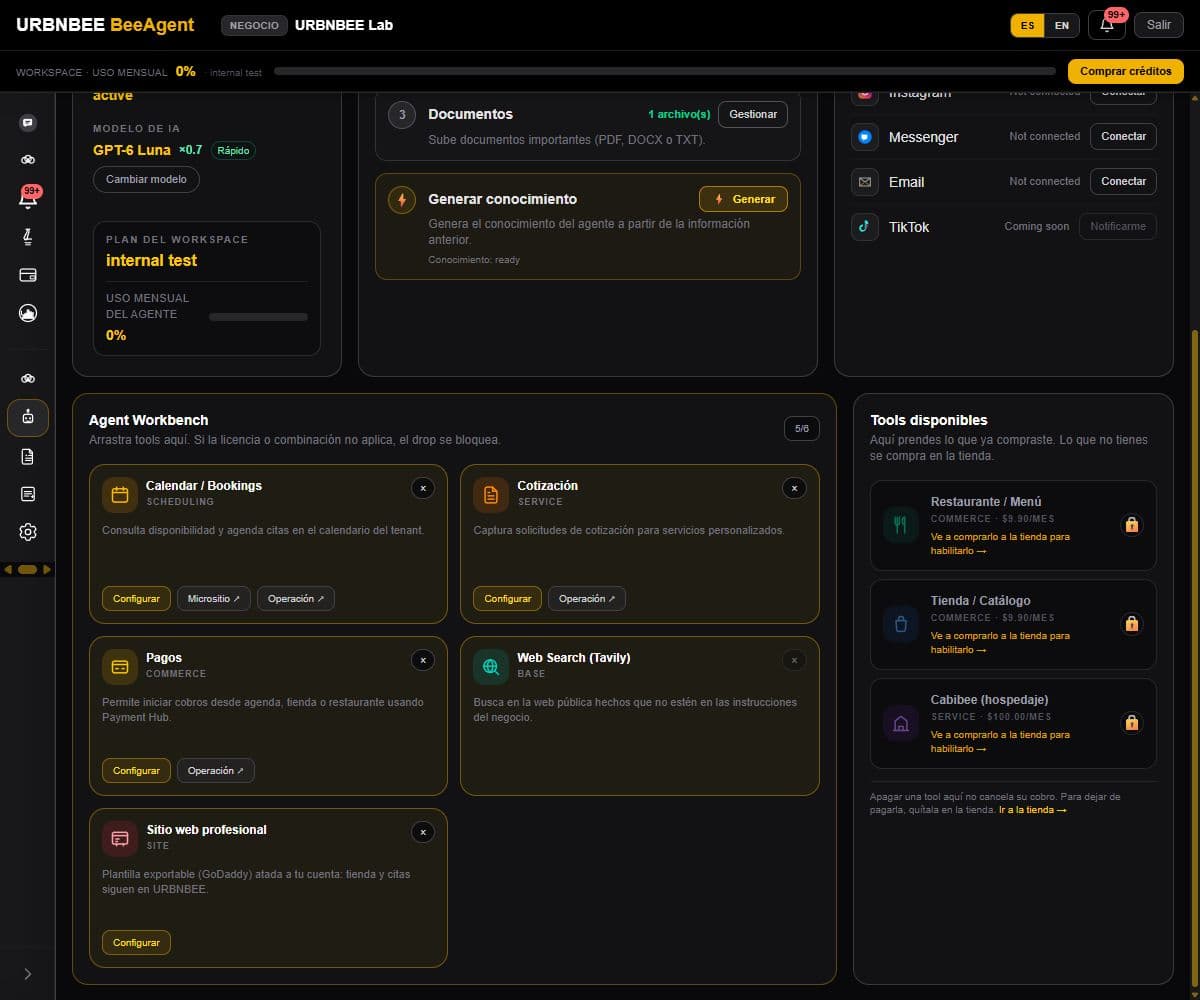
Business knowledge describes services, rules and frequently asked questions. Tools consult or perform operational steps within their scope. BeeAgent combines service with enabled tools such as calendar, shop, restaurant or quote requests. Configuration matters: an agent shouldn't offer a feature simply because it appears in a catalog. Current data and compatible business rules are essential.
Autonomy with visible limits
An agent can misinterpret intent or encounter incomplete data. Define what it may resolve, what requires confirmation and what must escalate. The team retains responsibilities such as reviewing quote prices and payment proofs. A useful demonstration shows information checks, recorded actions and where a person can pause AI to take over.
Put it into practice
- Test a request from message to recorded outcome.
- Check reply knowledge and who maintains it.
- Confirm enabled tools and boundaries.
- Define escalation criteria and exception owners.
- Review records and errors, not just persuasive wording.
The takeaway
The right question isn't whether a product calls itself an agent. It is whether conversations lead to verifiable next steps while the business retains control.
Editorial guidance, not a results promise. Capabilities depend on enabled tools and configuration; business examples are fictional.
Explore with fictional data →