Team and control
Operate from the app without carrying the business in your head
Mobility helps when it reveals pending work and context, not when it duplicates every notification.
URBNBEE editorial team · October 3, 2026 · 2 min
A phone shouldn't become a messy office
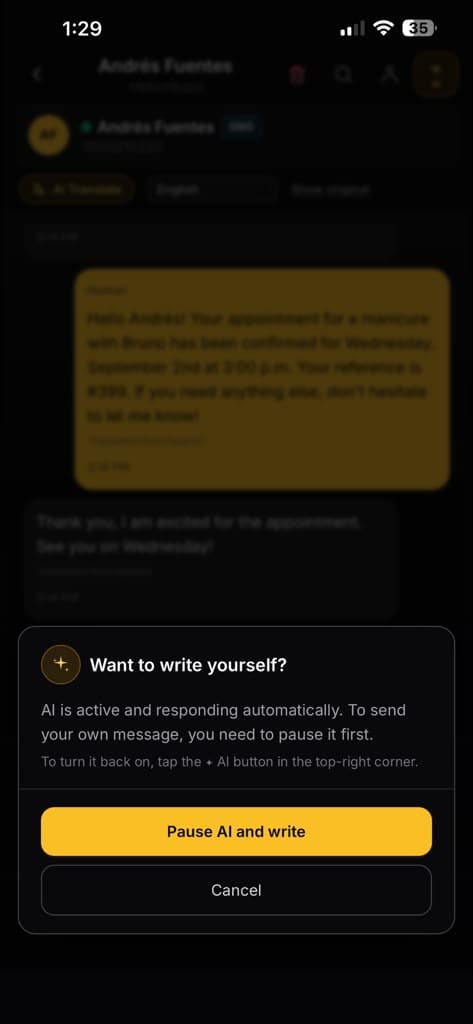
Away from the desk, owners need to distinguish urgent attention from work the team can continue. Endless messages don't establish priority. Define app tasks: conversations, orders, appointments, proofs and alerts. A small screen should support concrete decisions instead of reconstructing states from scattered notifications.
Configuration and operations differ
BeeAgent's web interface prepares tools and knowledge; the app supports operational follow-up. This doesn't mean every desktop function has an identical mobile view. Test required phone tasks before establishing routines. Don't promise offline operation or unverified mobile capabilities in the intended setup.
A shift can distribute responsibility
Not every alert belongs to the owner. Assign payments, orders and conversation interventions using available access controls. An app helps when people find their work with sufficient context. Review pending work at shift end and leave continuity; a connected phone isn't a substitute for assigned responsibility.
Put it into practice
- Define tasks that must be handled on mobile.
- Test available views before assigning team routines.
- Allocate work by responsibility, not first notification seen.
- Check permissions and avoid sharing a single session.
- End shifts with clear pending work for the next person.
The takeaway
An app shouldn't make you available for everything at all hours. It should surface important work while the rest continues under clear ownership.
Editorial guidance, not a results promise. Capabilities depend on enabled tools and configuration; business examples are fictional.
Explore with fictional data →