Daily operations
A reliable calendar starts with availability, not promises
Services, duration and specialists must be clear before a conversation becomes an appointment.
URBNBEE editorial team · October 3, 2026 · 2 min
A free time needs context
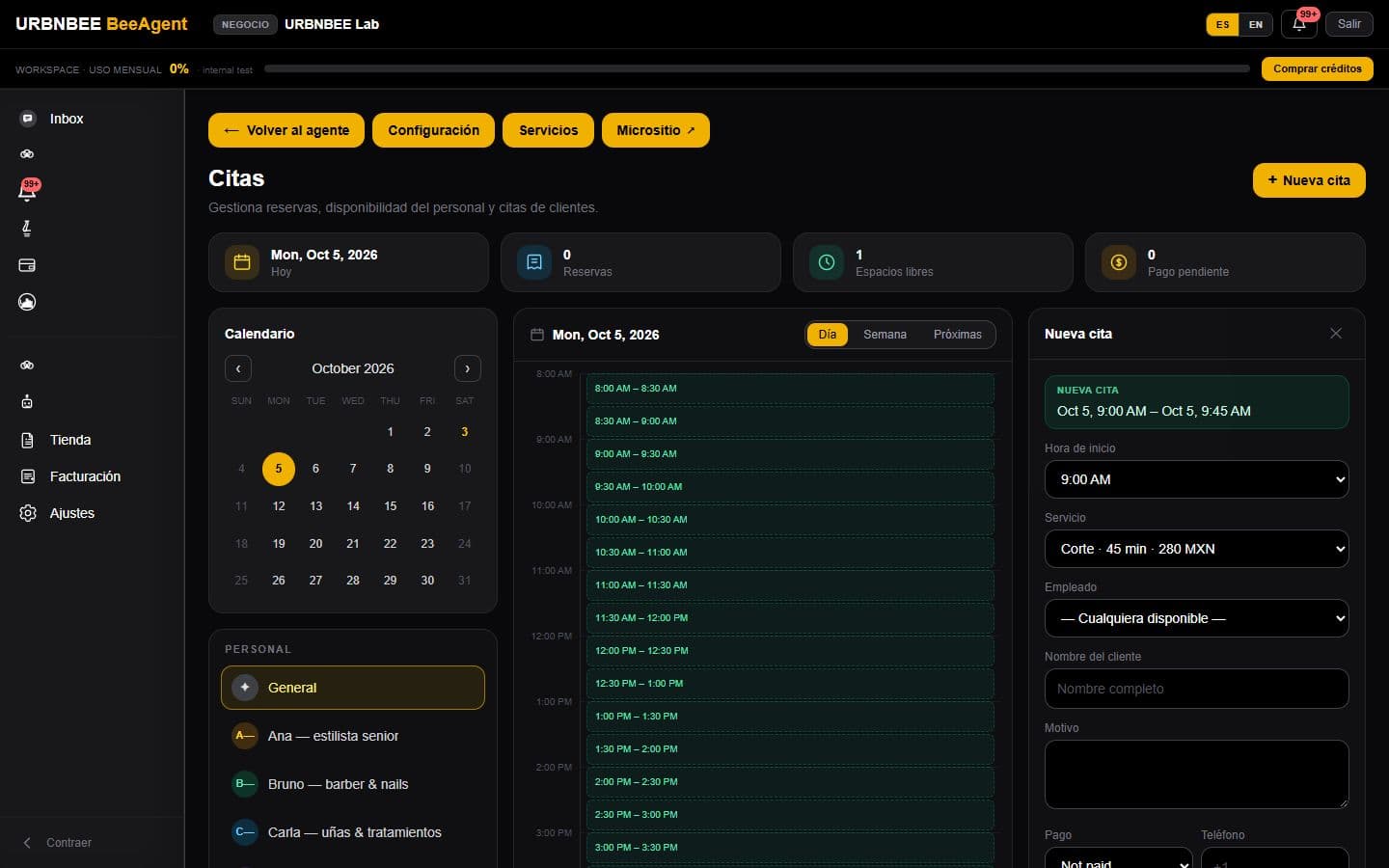
An empty space doesn't necessarily fit every service. Duration, specialist, working hours and operational rules matter. A fictional salon's 45-minute haircut differs from a 90-minute service. Configure the offering before testing agent replies. Customers should know the requested service and checked time rather than receive vague availability promises.
Confirmation must be verifiable
An availability inquiry isn't a booking. A request may need name, service and customer confirmation. Check the calendar record and status afterward. If payment or review remains pending, the team must understand that distinction. Evaluate BeeAgent's enabled calendar against recorded results, not only a confirmation sentence in chat.
Changes that don't disrupt the shift
Assign responsibility for services, hours and availability. Late updates after a specialist becomes unavailable can lead to obsolete replies. Define how changes are reviewed and who offers alternatives. Start by testing one service and specialist, including an unavailable slot, then expand and check that the team shares the same operational information.
Put it into practice
- Configure service duration and price before opening bookings.
- Validate specialists, shifts and availability rules.
- Separate inquiries, requests, confirmations and pending payments.
- Test an available time and an unacceptable one.
- Assign calendar maintenance and exception ownership.
The takeaway
Calendars work when customers and the team know what's confirmed. Actual availability should guide the conversation, not be forced to fit an early promise.
Editorial guidance, not a results promise. Capabilities depend on enabled tools and configuration; business examples are fictional.
Explore with fictional data →